
LOS ANGELES (May 2026) — When a veteran experiences a crisis, the outcome is rarely determined by a single conversation, organization, or responder. It is shaped by the relationships, trust, and coordination that exist long before that moment occurs.
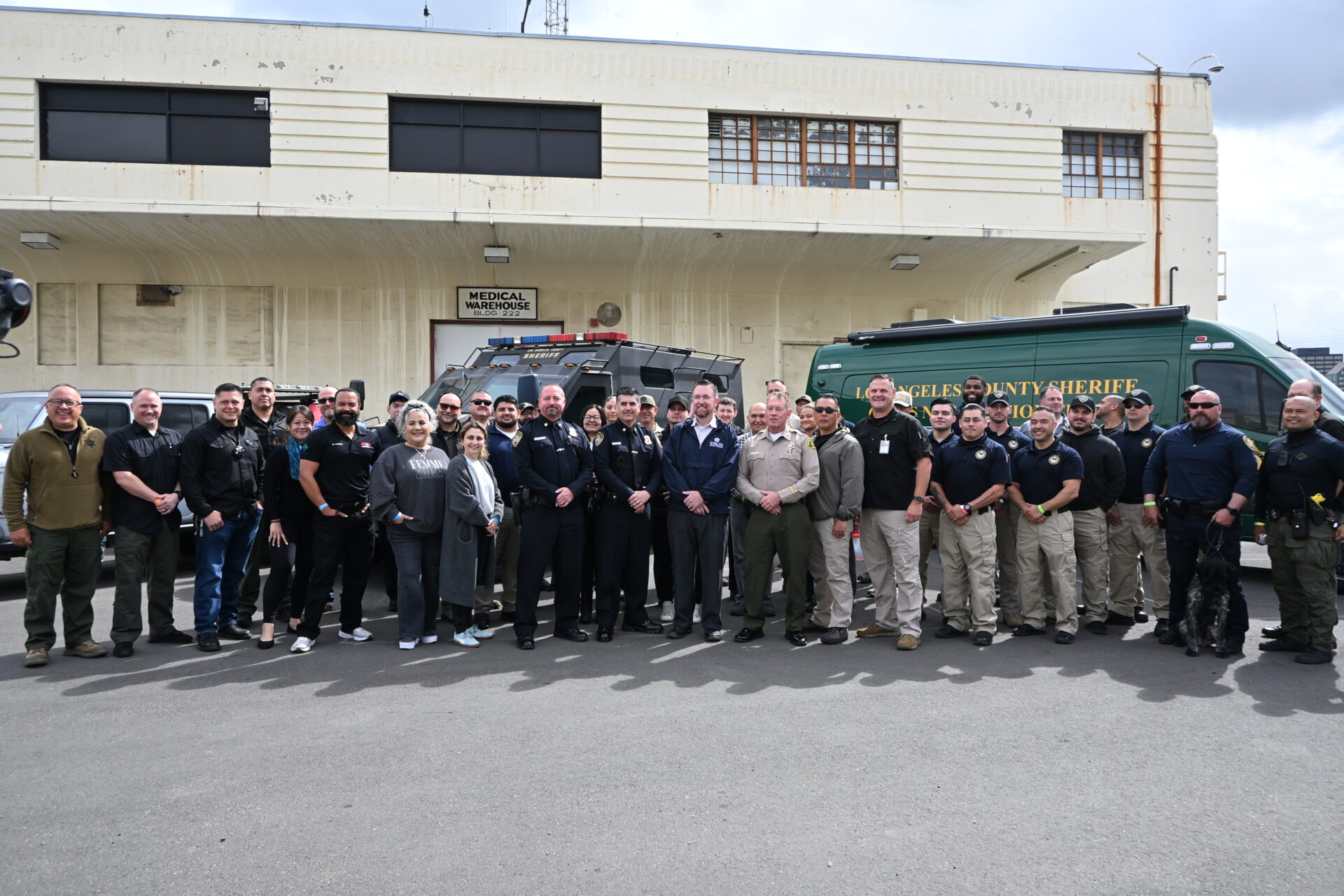
That belief was at the heart of the recent Veteran Crisis Negotiation Team (CNT) Training May 29, held at the West Los Angeles Department of Veterans Affairs (VA) Police Training Center, which brought together the Los Angeles County Sheriff’s Department (LASD) Veteran Mental Evaluation Team (VMET) and Veteran Homeless Outreach Team (VHOST), VA Police Department, VA VMET, Los Angeles Police Department, Los Angeles County Department of Military and Veterans Affairs (MVA), Veteran Peer Access Network (VPAN), the Federal Bureau of Investigation (FBI), and other community partners committed to improving how veterans are supported before, during, and after a crisis.
What began as an effort to strengthen crisis negotiation skills evolved into a collaborative training that combines crisis stabilization principles with relationship building, creating a common framework for agencies and organizations that may encounter veterans in distress.
“Whether you’re dealing with the barricade and you’re CNT, or you’re dealing with the veteran you’re encountering on a referral, it doesn’t matter where you are in the process. This training helps ensure that we all speak the same language,” said U.S. Marine Corps Veteran Sgt. John Strosnider with LASD VHOST and a lead organizer and instructor for the training.
That shared language, he explained, allows organizations with different responsibilities and resources to work together more effectively.
“Now it’s like the veteran doesn’t get dropped between us, as we have different responsibilities and resources for that veteran, instead we operate as a team of teams,” said Strosnider.
Over the past year, the training has continued to grow as more agencies and organizations have seen the value of learning and collaborating together. What began as a modest gathering has expanded to include law enforcement personnel, veteran-serving organizations, outreach teams, peer support specialists, and community partners from across the region.
“It is consistently growing with different community partners coming together and wanting to benefit from the training,” said Strosnider.
The value of that collaboration is already being seen in the field. Strosnider shared the story of a veteran experiencing a severe mental health crisis who had threatened to force a confrontation with responding officers. Using the concepts taught in the training, responders slowed down, examined the factors contributing to the crisis, and discovered the veteran had recently learned that a long-awaited knee surgery had been postponed.
By identifying the underlying issue driving the crisis and connecting the veteran with care, responders were able to safely change the trajectory of the encounter. The veteran was transported to receive care and connected to the support he needed.
“By the time we got to the hospital, he was stabilized. He was able to walk in, get the care he needed,” said Strosnider.
While crisis response is a key focus of the training, participants emphasized that preventing crises and supporting veterans after a crisis are equally important.
U.S. Army Veteran Sandra Lopez, Program Manager for VPAN Supervisorial District 2 – SHARE!, said one of the most valuable lessons was learning to shift from a reactive mindset to a proactive one.
“I think it definitely brings to the team the value of understanding the difference between having a mindset of stabilization versus de-escalation. De-escalation is very much what it sounds like. It’s reactive. We want to be preventative,” said Lopez.
For veteran peers working with veterans experiencing homelessness, isolation, substance use challenges, and other barriers, that distinction can make a significant difference.
“Being able to listen to their perspective, observe what’s going on, and then take what they’re telling us and understand it and then help them in the way they want to be helped,” said Lopez.
Lopez noted that while VPAN peers are not crisis negotiators, they often serve as a critical bridge between veterans and long-term support systems.
“It’s not just about fixing the current crisis. It’s about who’s going to continue being with them along the way while they heal,” said Lopez.
Throughout the training, participants practiced role-playing exercises, shared experiences, and built relationships across organizations. For Lopez, those relationships are among the most valuable outcomes of the training.
“You have to build that relationship with them and for them to trust that we’re going to show up and come through when they need us,” said Lopez.
That emphasis on trust and veteran-to-veteran connection resonated with MVA Director Jim Zenner, who shared how his own experiences navigating life after military service shaped his belief in peer support, collaboration, and removing barriers to care. He said those lessons continue to guide MVA’s efforts to strengthen partnerships and connect veterans with support before challenges escalate into crises.
“I’ve never seen this level of collaboration before,” said Zenner. “A lot of the work that we’re doing is getting out in front of that and keeping veterans from even getting into the justice system to begin with.”
Throughout the day, participants returned to a common theme: no single organization can meet every need a veteran may face. Lasting solutions are built when agencies, peers, and community partners share information, trust one another, and work toward the same goal.
Organizations, first responders, veteran-serving professionals, healthcare providers, outreach teams, and community partners who may encounter veterans in crisis are encouraged to participate in future Veteran Crisis Negotiation Team Trainings. Upcoming training opportunities are available through Eventbrite at https://www.eventbrite.com/e/cnt-strategies-for-veterans-tickets-1984844962714?aff=oddtdtcreator.
Story by Ashley Cohen, Public Information Associate, Los Angeles County Department of Military and Veterans Affairs and photo by Layla Romero, Public Information Staff Assistant, Los Angeles County Department of Military and Veterans Affairs