

Death and Burial Benefits


What are Veterans Burial and End-of-Life Benefits?
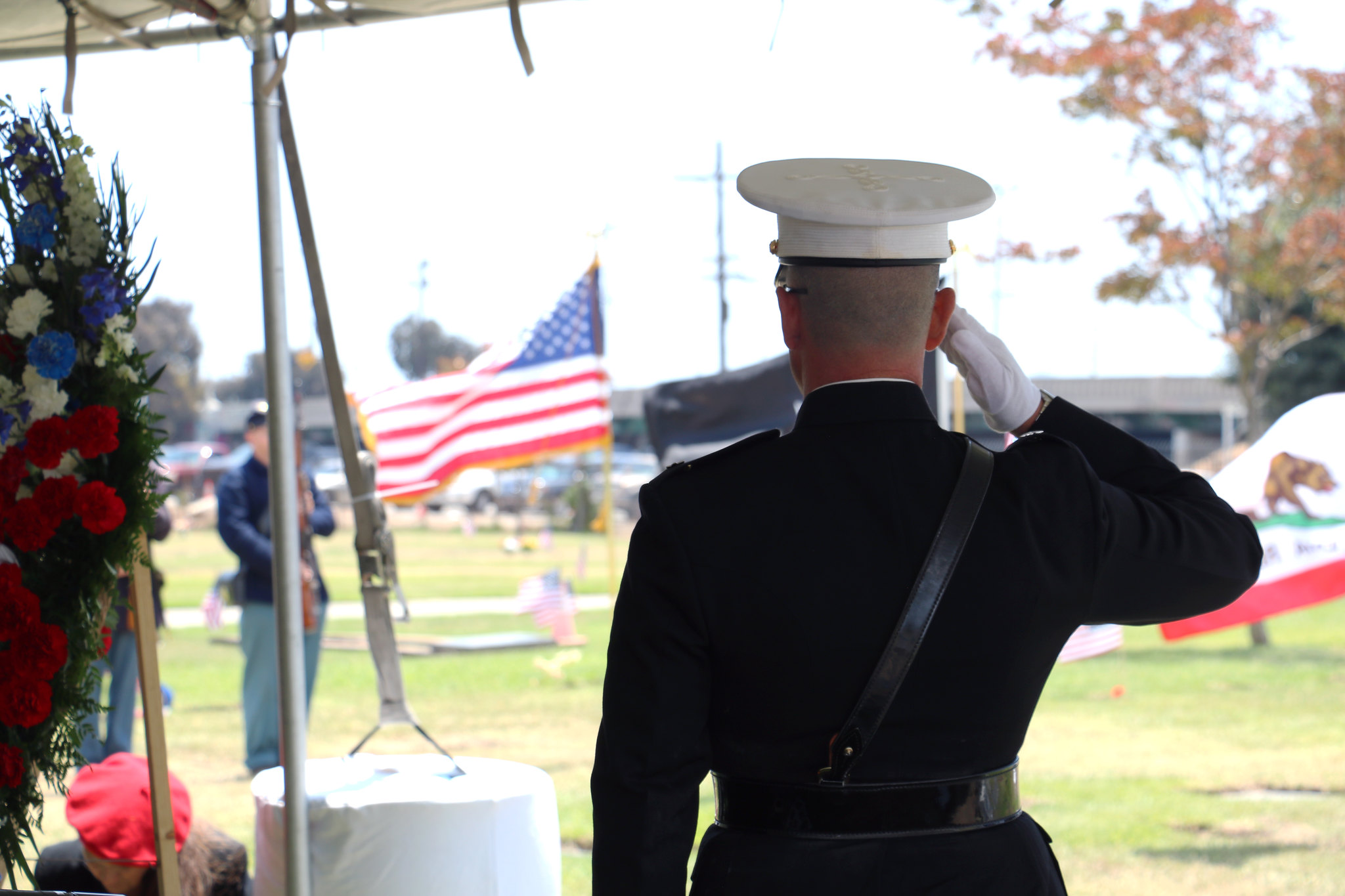
End-of-Life benefits may include the following: gravesites for casket or cremation remains, headstones or markers, opening and closing of the graves, and continued perpetual care. Burial of eligible veterans and dependents is at no cost when interred at a national cemetery. Associated funeral expenses are the responsibility of the veteran and/or family.
Military Funeral Honors Program
Military funeral honors are available within the State of California for honorably discharged veterans of the U.S. Armed Forces.
Types of Funeral Honors
At a minimum, two service representatives will render honors, sound Taps, fold the flag and present it to the next of kin. Additionally, a detail to fire volleys, a chaplain, and/or a detail to serve as pall-bearers may be provided depending on the desires of the surviving family and resources available. Frequently, funeral honors are rendered in concert with a local VSO.
Get Expert Guidance on Burial and End-of-Life Benefits

Veterans Service Officers (VSOs) and Veteran Peer Specialists can provide guidance on end-of-life benefits.
Who is eligible?
You may be eligible for Veterans burial allowances if you’re paying for the burial and funeral costs and you won’t be reimbursed by any other organization, like another government agency or the Veteran’s employer. You must also meet all of these requirements.
- One of these relationships or professional roles describes your connection to the Veteran:
- You’re the Veteran’s surviving spouse (Note: We recognize same-sex marriages.), or
- You’re the surviving partner from a legal union (a relationship made formal in a document issued by the state recognizing the union), or
- You’re a surviving child of the Veteran, or
- You’re a parent of the Veteran, or
- You’re the executor or administrator of the Veteran’s estate (someone who officially represents the Veteran), or
- You’re a family member or friend who isn’t the executor of the Veteran’s estate, or
- You’re a representative from a funeral home, cemetery, or other organization
The Veteran must not have received a dishonorable discharge, and one of these circumstances must be true:
- The Veteran died as a result of a service-connected disability (a disability related to service), or
- The Veteran died while getting VA care, either at a VA facility or at a facility contracted by VA, or
- The Veteran died while traveling with proper authorization, and at VA’s expense, either to or from a facility for an examination, or to receive treatment or care, or
- The Veteran died with an original or reopened claim for VA compensation or pension pending at the time of death, and they would’ve been entitled to benefits before the time of death, or
- The Veteran died while receiving a VA pension or compensation, or
- The Veteran died while eligible for compensation or a VA pension at their time of death, but instead received full military retirement or disability pay
Or:
- The Veteran had been getting a VA pension or compensation when they died, or
- The Veteran had chosen to get military retired pay instead of compensation
Note: VA will also provide an allowance for the cost of transporting a Veteran’s remains for burial in a national cemetery.
What financial assistance or benefits are available to help cover the costs of burial and plot-interment for veterans?
VA burial allowances provide partial reimbursements for the burial and funeral costs of an eligible veteran.
How to get a flag for a veteran's burial?
Our VSOs can help ensure you meet the one-year deadline to apply for benefits after submitting your claim, protecting your effective date.
What financial assistance or benefits are available to help cover the costs of burial and plot-interment for veterans?
How to request a Presidential Memorial Certificate to honor your loved one's service?
You need to submit a Presidential Memorial Certificate Request Form.