
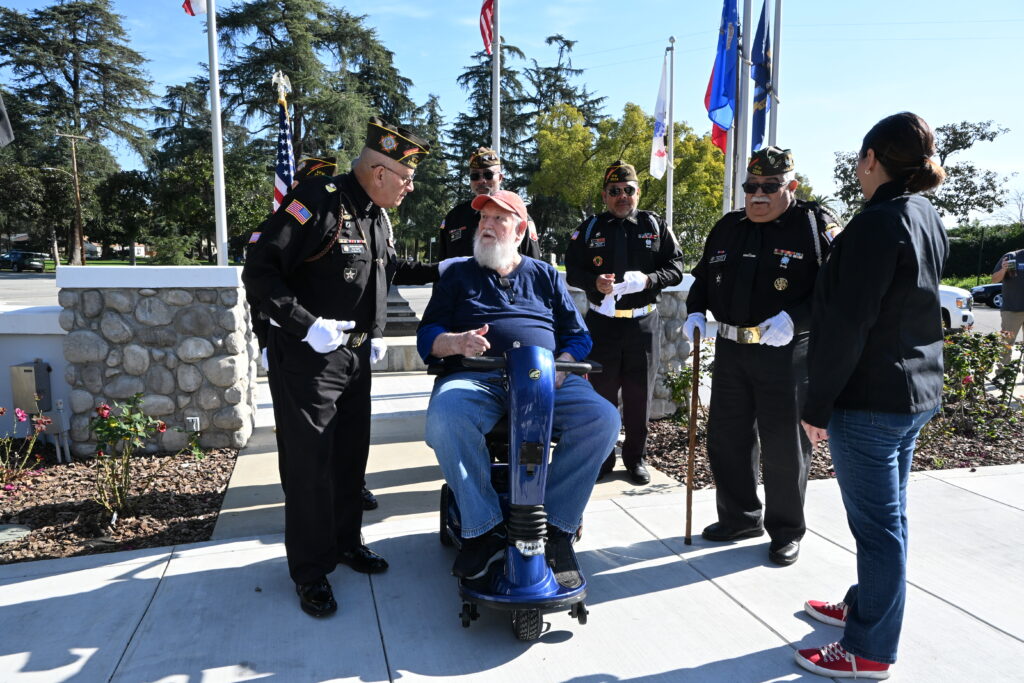
LOS ANGELES (February 2026) — Navy Veteran John “Jack” McElveen received a mobility scooter during a community gathering Feb. 6, at Veterans of Foreign Wars (VFW) Post 12034 in La Verne, where local leaders, veteran advocates, and law enforcement partners came together to support his mobility and overall wellbeing. The collaborative effort reflects a shared commitment to reducing isolation and increasing independence for veterans in the community.
Visibly moved by the moment, McElveen expressed his appreciation to those in attendance.
“I don’t know what to say, but thank you much,” McElveen shared during the presentation.
Those closest to the moment described the scooter as a turning point that will significantly improve his daily life.
“This is a huge game changer,” said McElveens son in law. “I didn’t realize how much this would mean. Thank you very much to everybody for coming out.”
The ceremony also reflected the deeper purpose behind the Veterans Peer Access Network’s work in partnership with community organizations.
“I showed up, and I was blown away,” said Simone Silva. “We get a lot of veterans who don’t have many opportunities to feel special as an individual. We were able to do a service for this gentleman; we were able to make it feel special.”
VFW Post 12034 leadership emphasized that collaboration is key to meeting veterans’ needs.
“I am very proud to be here and feel much privilege to be here on this occasion so that he can get what he needs,” said Maria McKinney, Commander of VFW Post 12034. “This was a wonderful opportunity to show what the VFW can do with other organizations and help out as many veterans and families now and in the future.”
City leadership echoed that sentiment, reinforcing La Verne’s ongoing support of veterans.
“We will always have your back,” said La Verne Mayor Pro Tem Meshal “Kash” Kashifalghita. “On behalf of a grateful city, we wanted to thank the VFW Post for bringing us here today. It’s a great event, giving a veteran the opportunity to be more mobile, and we’ll see him out there in the community.”
Law enforcement partners also highlighted the broader impact of mobility on health and safety outcomes.
“Those who are in need of mobility often have issues later on where they experience crisis,” said Sergeant Patrick Gadut, who oversees the Department’s Veteran Mental Evaluation Team. “Crisis is not just mental health crisis. It can be physical crisis.”
Sergeant Gadut noted that restoring mobility helps reduce isolation and strengthens community connection, both of which are critical for veterans.
“Community engagement, especially for veterans, is very important because there’s a lot of isolation that does take place,” he said. “We love seeing all the different organizations come together to support each other, especially in the veteran community.”
The scooter presentation served as a reminder that meaningful change often begins at the local level, with neighbors, advocates, and agencies working side by side. Through partnership and shared commitment, one veteran gained not only mobility, but renewed connection and support from the community he served.
Story and photos by Layla Romero, Staff Assistant, Los Angeles County Department of Military and Veterans Affairs