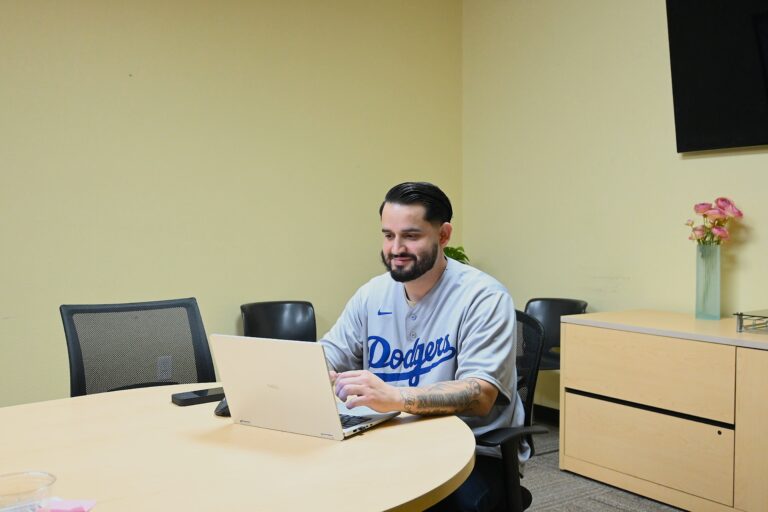

LOS ANGELES, CA (September 19, 2025) – Marine Corps Veteran George Casillas transformed unimaginable loss into a mission of service. After losing both his wife and son to suicide, he built a legacy of connection, long-term care, and peer support for veterans and their families through the founding of Veterans Stand Together (VST) and his leadership within the Los Angeles County Department of Military and Veterans Affairs (MVA), Veteran Peer Access Network (VPAN), Supervisorial District 4 (SD4).
Casillas’ son Elijah joined the Air Force at 19 and served as a satellite communications technician stationed in Colorado Springs, where he shared a house with fellow service members. Over time, his living situation changed as his housemates moved into new chapters in their lives, leaving Elijah without the companionship he once had at home.
“He was all alone, and he didn’t tell anybody,” George said. “We would talk about what we were doing at Veterans Stand Together. He’d go, ‘I can’t wait till you have that out here. A lot of people need it. I have a lot of friends who are depressed.’ But he would always make me feel like everything was good on his end.”
On November 22, 2024, George received the call that forever changed his life. His son Elijah had died by suicide.
“I was destroyed. I had to go up and bring my boy home,” Casillas said. “As a survivor, the one thing I feel is guilt. For every little thing.”
When his wife passed in 2010, Casillas had already been navigating years of emotional strain. His wife had been diagnosed with schizoaffective disorder, and their relationship was marked by hospitalizations, separation, and the challenges of raising children through a mental health crisis.
“Every day coming home and wondering, is she alive? Are my kids alive? I felt 50 years old when I was 20,” said Casillas about that period of his life.
He didn’t recognize at the time that he was experiencing depression and panic attacks himself. Even while advancing professionally, he struggled internally, he said.
“The guilt I feel as a father is 10 times the guilt I felt with my wife,” he said. “When someone dies, we look to God and say ‘why.’ When someone kills themselves, we look to ourselves and say ‘why.’ I realized that this is happening to other families—not just myself.”
He shares his story because he knows it’s not unique and believes peer navigation—through organizations like VST and VPAN—is essential for suicide prevention, not only in moments of crisis but through sustained, relationship-based care that meets veterans where they are.
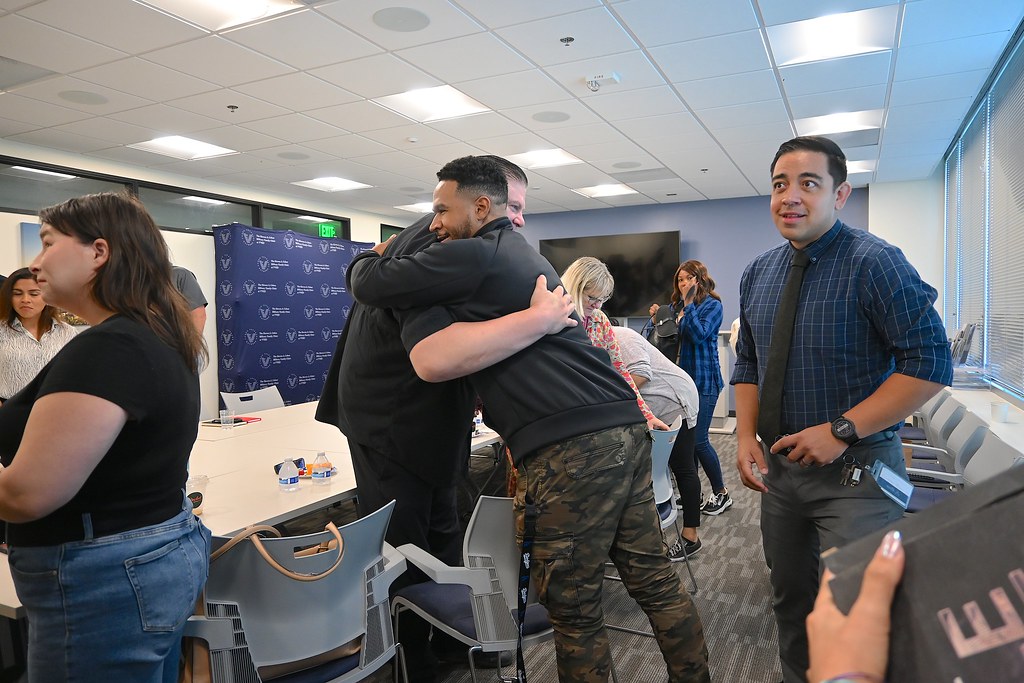
Casillas continues to share his story in communities across Los Angeles County, using his own experiences to open conversations about resilience and hope. On Friday, September 19, he joined the Steven A. Cohen Military Family Clinic for a Coffee Chat in Torrance recognizing Suicide Prevention Awareness Month.
The gathering brought veterans, service members, and military-connected families together for connection, conversation, and practical tools to strengthen mental health and support one another.
“At Veterans Stand Together, we don’t ever just hand you something and walk away. We think about every little thing,” Casillas said. “We stop what we’re doing and we take care of them. That’s hard in our world, but there’s passionate people that work there.”
He added that if such support had been available to his son, things might have been different.
“I’m convinced that if that existed, in that city, it wouldn’t have happened,” Casillas said of his son’s passing. “He just didn’t have anybody to talk to.”
Since 2020, Veterans Stand Together has served over 7,000 veterans. Casillas is proud of one outcome in particular.
“We’ve never had a suicide in our caseload,” he said.
He emphasizes the power of family, peer connection, and long-term support. After his son’s death, it was his brother—also a Marine—who helped hold him up.
“It made me realize how much you need family in those moments,” said Casillas.
He believes in using the strength that veterans often carry to fight for those who can’t. Casillas’ goal is simple: meet people where they are, remove barriers, and build something that lasts.
“As Marines, we’re fighters. And sometimes we get into trouble for that. But we have to use that energy to fight for people who are a little lost or can’t fight for themselves,” he said. “By removing barriers, we can do amazing things.”
If You or Someone You Know is Struggling
You are not alone. Support is available—judgment-free, veteran-centered, and community-driven.
Peer Support & Connection
Veteran Peer Access Network (VPAN)
Email: vpan@dmh.lacounty.gov
24/7 Crisis Support
Call or text 988, then press 1 for Veterans
Article by: Layla Romero, Communications Specialist, Los Angeles County Department of Military and Veterans Affairs (MVA)